

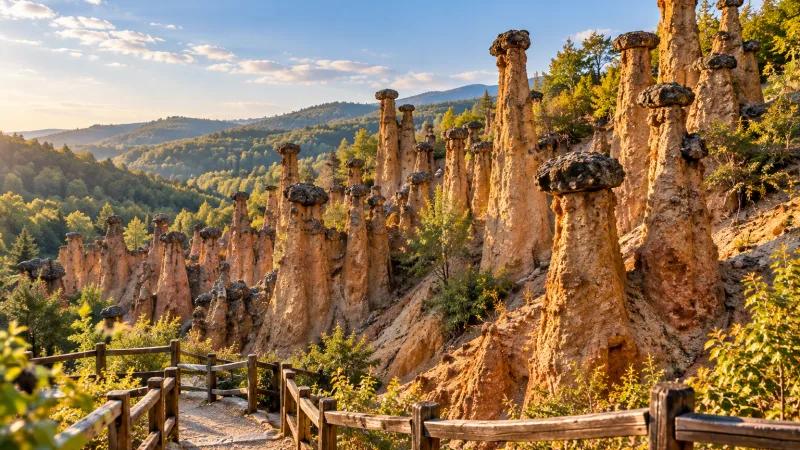
Đavolja Varoš is a natural monument in southern Serbia, in the Kuršumlija area. On the slopes stand stone pillars, 202 in total, from two to fifteen metres tall, with an average diameter of about one metre.
Why they are still standing
The pillars are made of softer volcanic rock that rain and wind have been washing away for thousands of years. Each pillar is topped by a cap of harder stone — weighing up to a hundred kilograms — and it works like an umbrella, keeping water from eroding the figure from above. When the cap falls, the pillar crumbles quickly.
Two springs
Beside the figures there are two springs with unusual water: highly acidic and heavily mineralised. The taste is, frankly, an acquired one, but locals consider it healing and come to collect it.
When to go
The best time is from late April to June and from September to October: not hot, with soft light that suits photography. In summer there is little shade on the open slopes and the stone heats up, while after rain the paths turn muddy. Winter is beautiful too, but the climbs become slippery and some approaches may be closed.
What to bring
Water, a hat and shoes with grip. Food is best brought along or eaten in Kuršumlija — there is no café or shop at the site itself. In the shoulder season a rain jacket helps, and it is worth having cash for the entrance.
How much time to allow
Walking the monument itself takes an hour and a half to two hours. With the drive from Belgrade it is a full day: leave early in the morning and return in the evening. If you prefer not to rush, staying overnight in Kuršumlija or at one of the local spas works well.
What is nearby
The same Kuršumlija municipality has the Prolom Banja thermal spa, and on the slopes of Kopaonik lies Lukovska Banja: both pair well with a visit to the stone figures if you have an extra day.
Getting there
- By bus from Belgrade: from the main bus station (BAS) to Kuršumlija. About seven departures a day and roughly 4.5 hours on the road; Lasta and other operators run it.
- From Kuršumlija: about 27 kilometres to the monument. A local bus runs, but a taxi or a pre-booked transfer is easiest.
- By car: from Belgrade towards Niš, then on to Prokuplje and Kuršumlija. The landmark is the village of Rudare, where signs point to Đavolja Varoš.
- What to keep in mind: timetables change by season — check at the bus station before travelling.