

Relocation guide
Verified step-by-step guides for life in Serbia: residency, banking, documents and daily life.
 Banking & Finance
Choosing an accountant: when you need one and what to settle before the contract
On the lump-sum regime an accountant is usually unnecessary, while a complex business needs one. We cover where to look, what it costs, why you should not hand over your signature, and who bears the fines.
 Banking & Finance
Tax residency certificate: why it is requested and how to get it
Clients in the EU and Armenia often ask for confirmation that your business is a Serbian taxpayer. We cover how it is obtained, why a separate certificate is needed per country, and where the second trap lies.
 Banking & Finance
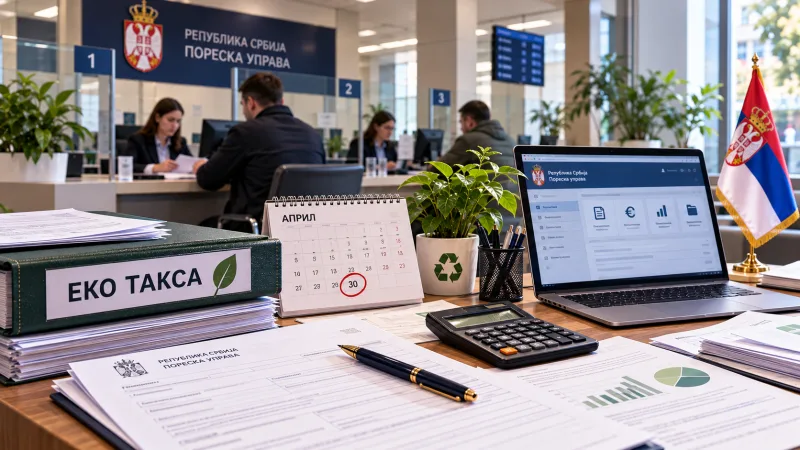
Eco-tax in Serbia: who pays, when to file and how much it costs
Eco-tax is paid by sole traders and companies alike, and the return is filed once a year by 30 April. We cover what the amount depends on, what to declare when a business is frozen, and what to do if the deadline is missed.
 Banking & Finance
The ePorezi tax account: access, statements and certificates
Through ePorezi a business owner receives tax decisions, arrears statements and tax payment certificates. We cover what access requires, why the business may not appear, and which certificates are obtained here.
 Banking & Finance
Sole-trader taxes in Serbia: the lump-sum regime, deadlines and penalties
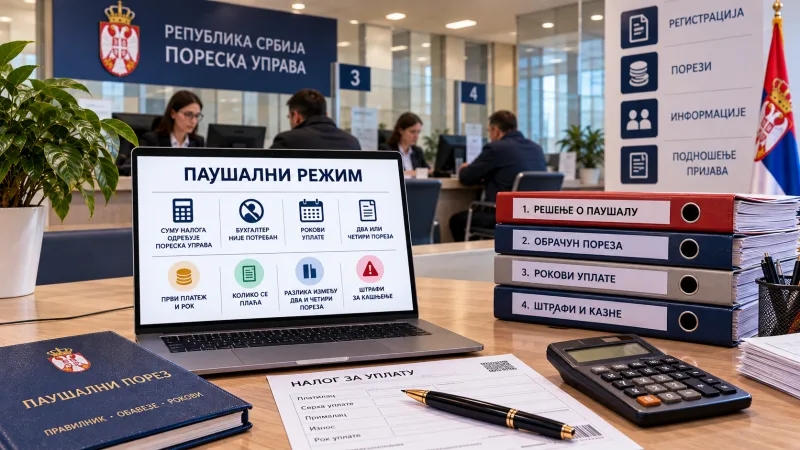
The lump-sum regime is convenient because the tax administration calculates the taxes itself and no accountant is needed. We cover deadlines, the first payment, the difference between two and four taxes, and late-payment penalties.
 Work
Work
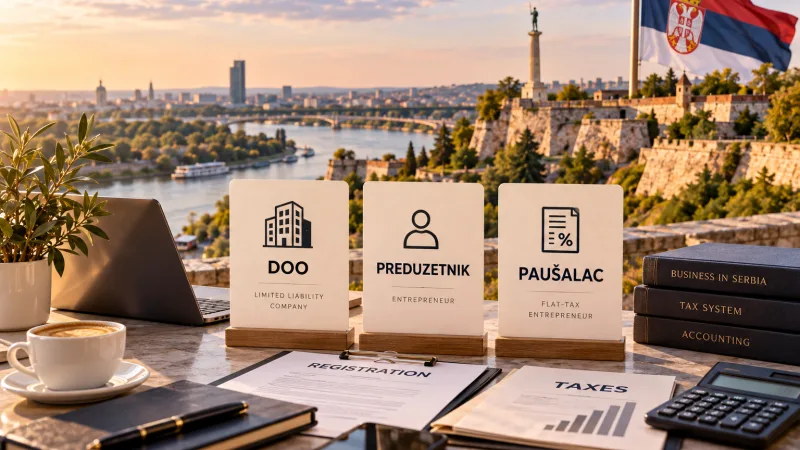
Opening a business in Serbia: how it works and what will kill your status
A sole-trader business can be registered without residence, and the APR decision takes up to five working days. We cover the registration process, activity requirements, and the main trap — an empty business with no turnover.
 Residency & Immigration
Permanent residence in Serbia: how long to wait, how to apply and what changes
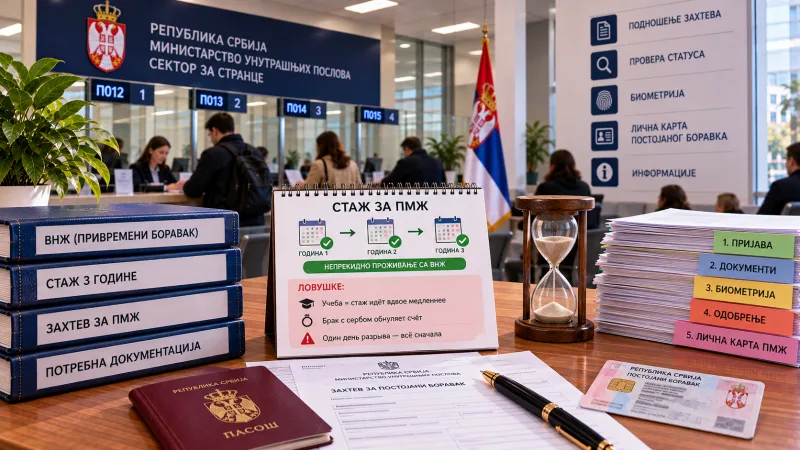
Permanent residence requires almost three years of continuous residence with a permit, and there are traps: study counts at half speed, marriage to a Serbian citizen resets the clock, and one day's gap means starting over.
 Residency & Immigration
Applying for residence: online, in person, biometrics and collecting the card
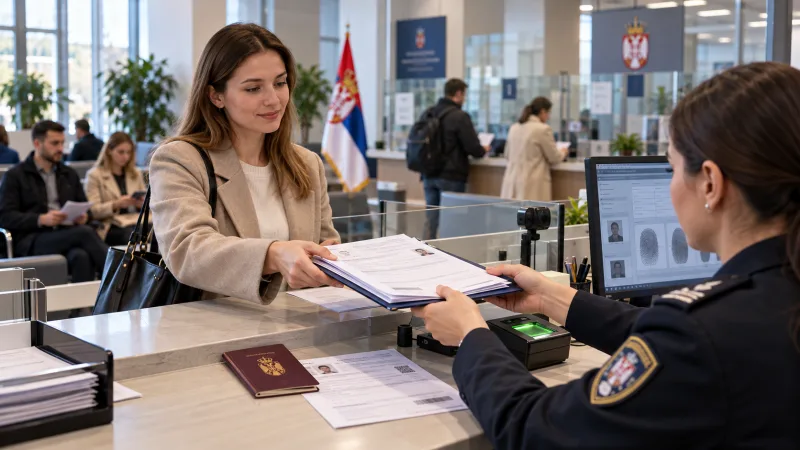
You can file online, in person at the MUP or by post — and the difference is fundamental. We cover who uses which route, what happens after approval, how biometrics work, and how long residence is granted.
 Residency & Immigration
Refunding a state fee: when a payment went astray or was left unused
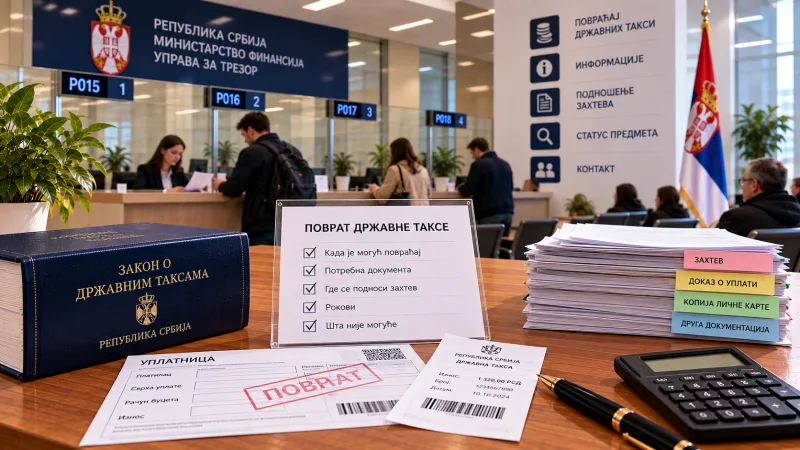
Money paid as a state fee can be refunded if the payment details were wrong or the fee was never used. We cover where to go, which papers to take, and why a refund is not always possible.
 Residency & Immigration
Lost your foreigner's ID card: how to replace it and the fees
Without a loss report no new card will be issued, and there are two fees. We cover the order of steps, an email template for booking, payment, and what cannot be done during replacement.
 Daily Life
The foreigner's ID card: what is stored on it, how to read it and where it is needed
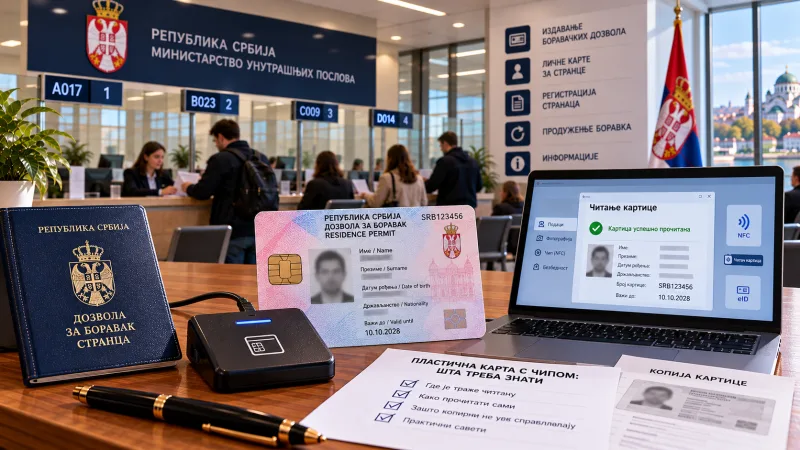
Since 2024 foreigners receive a plastic chip card instead of a passport sticker. We cover where a read card is required, how to read it yourself, and why copy shops do not always manage.
 Residency & Immigration
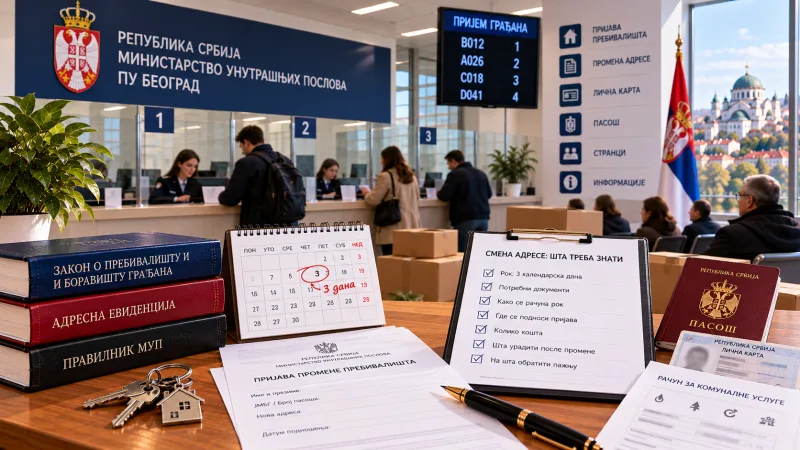
Changing your address with residence: three days to notify and a fine for delay
After moving you have three calendar days to notify the MUP. We cover the documents, how the deadline is counted, why it is sometimes better to delay the move, and what to do after the change.
 Residency & Immigration
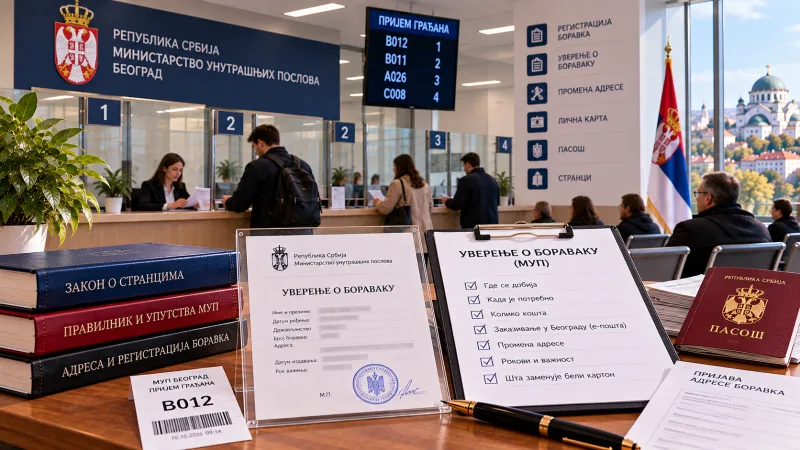
Residence confirmation: the registration certificate for those who hold residence
Once you have residence, the white card is no longer issued — instead the MUP provides a residence confirmation. We cover where it is requested, what it costs, why Belgrade requires booking by email, and the address trap.
 Residency & Immigration
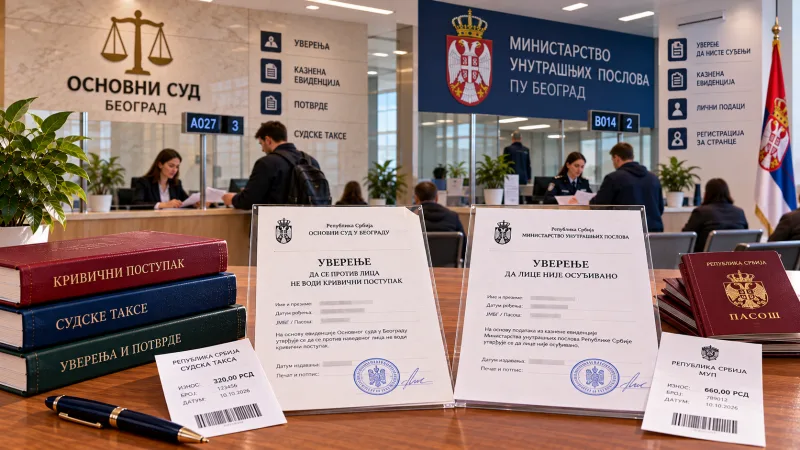
Criminal record certificate in Serbia: court or police, timescales and cost
There are two different certificates: the court confirms no criminal proceedings are pending against you, the police confirm you have no convictions. We cover which is needed for permanent residence, which for a visa, the cost and the wait.
 Daily Life
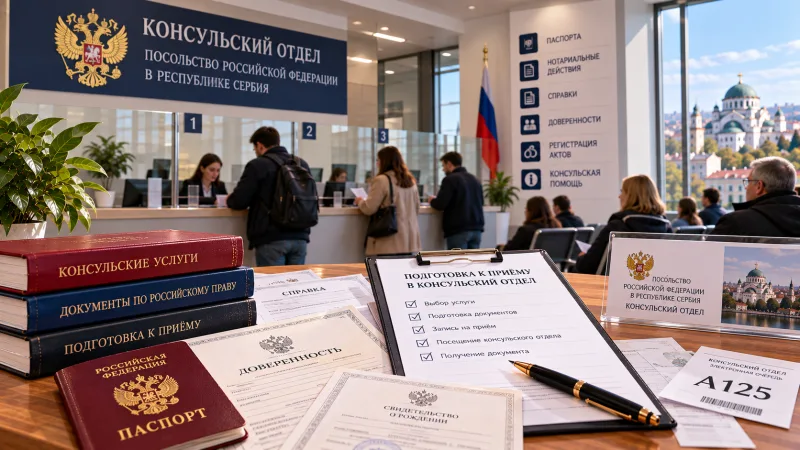
Notarial services at the Russian consulate: what they do and how to prepare
The consular section draws up documents under Russian law, so in Russia they are accepted as they are, without an apostille or further translation. We cover the services, the address, preparation and the main issue — the appointment queue.
 Residency & Immigration
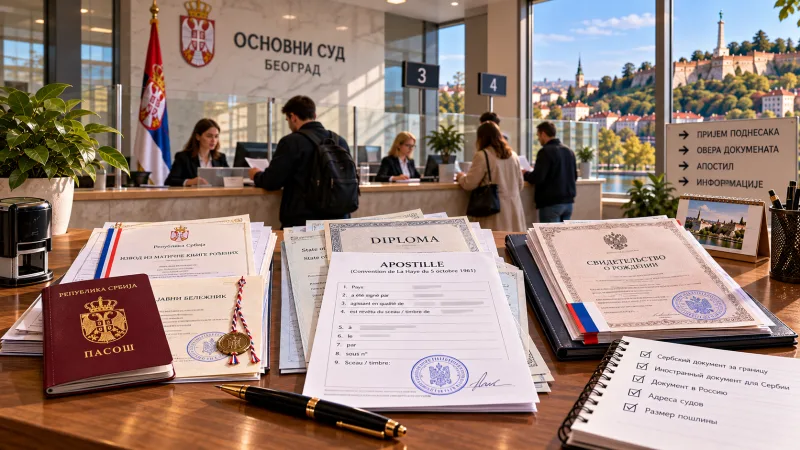
Apostille: how to certify a document for another country and when it is not needed
An apostille has three different scenarios: a Serbian document for abroad, a foreign document for Serbia, and a document travelling to Russia. We cover each, including court addresses and the fee.
 Healthcare
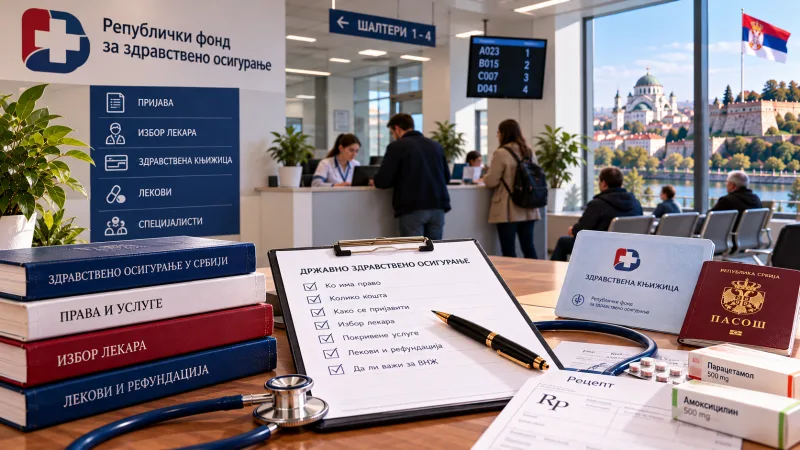
State health insurance: how to get the card and see a doctor
State health insurance gives access to doctors and cheaper medicines, and sometimes replaces a policy when applying for residence. We explain who can get it, what it costs, and how to attach to a doctor.
 Healthcare
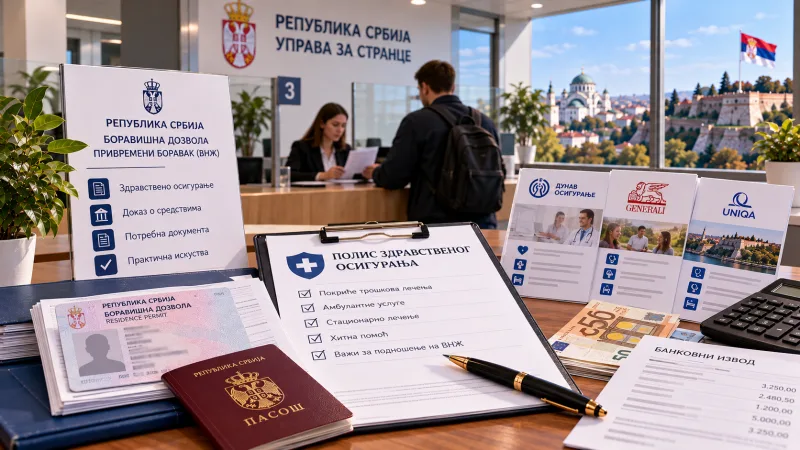
Health insurance for residence: a policy or money in the account
When applying for residence you need either a Serbian insurer's policy or proof of funds in an account. We cover what a policy costs, what coverage counts as normal, and what the last few months of practice look like.
 Education
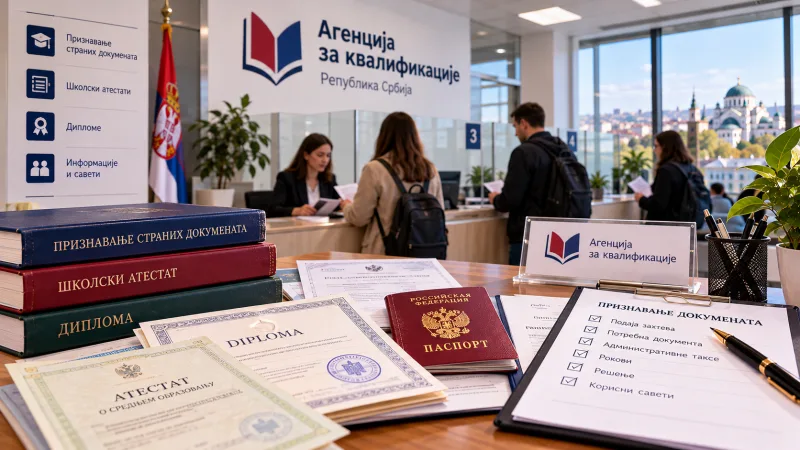
Nostrification of certificates and diplomas: recognising an education document
Recognition of foreign education documents in Serbia is handled by the Agency for Qualifications. We cover the fees by level, the difference between a school certificate and a degree, the timescales, and the main trap when collecting the decision.
 Education
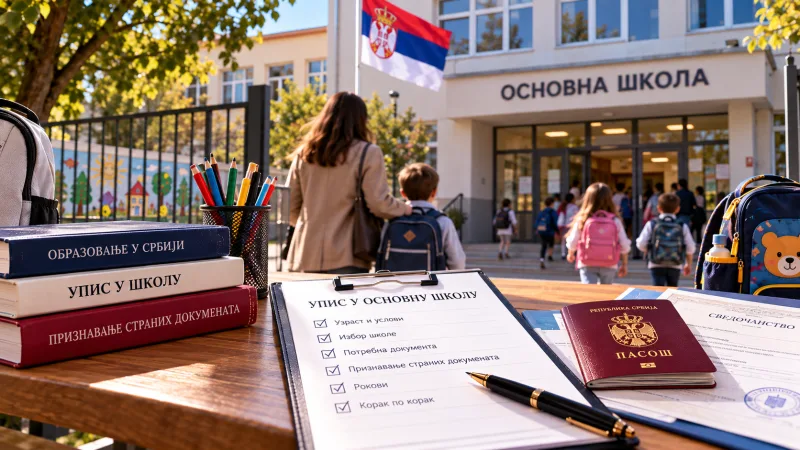
School for your child in Serbia: how to enrol and what to prepare for
Primary school is compulsory and free, but there are age rules, deadlines for choosing a school, and a separate procedure for recognising school documents from another country. We set out the steps.
 Work
Work
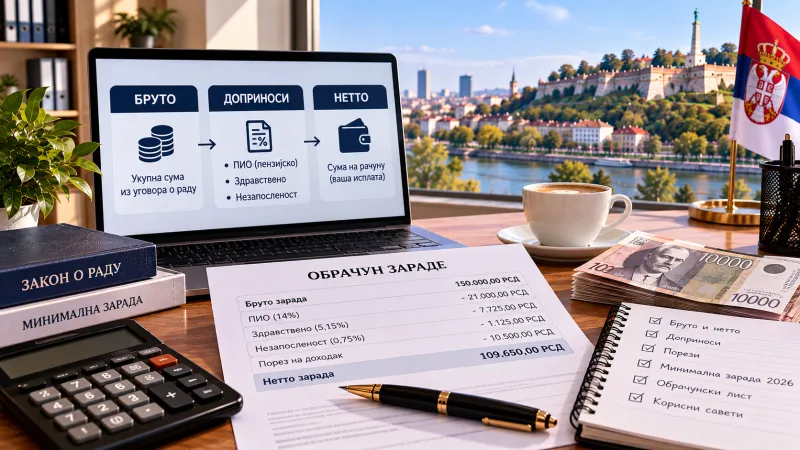
Salaries in Serbia: how net pay is calculated, taxes and contributions
Why the figure in a vacancy and the figure in your account differ: how contributions are calculated, what net means, the 2026 minimum wage, and what to check on your payslip.
 Work
Work
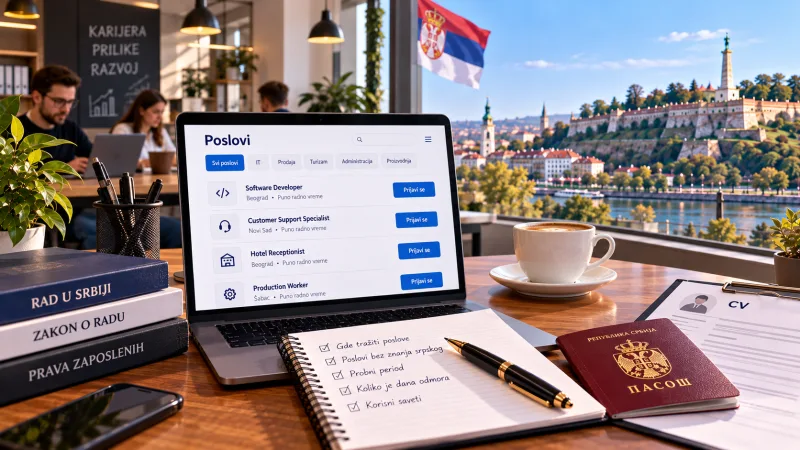
Working in Serbia: where to look, what the market is like, and the rights you have
Where to find vacancies in Serbia, which sectors hire without Serbian, what a probation period involves, and how many days of leave the law guarantees.
 Entry & Visas
Visa runs in Serbia: how they worked and why the scheme is breaking in 2026
For years, exiting every 30 days allowed people to live in Serbia without residence. Since 2026 the country applies the 90-in-180 rule, and courts are already ordering fines and departure. We set out exactly what has changed.
 Entry & Visas
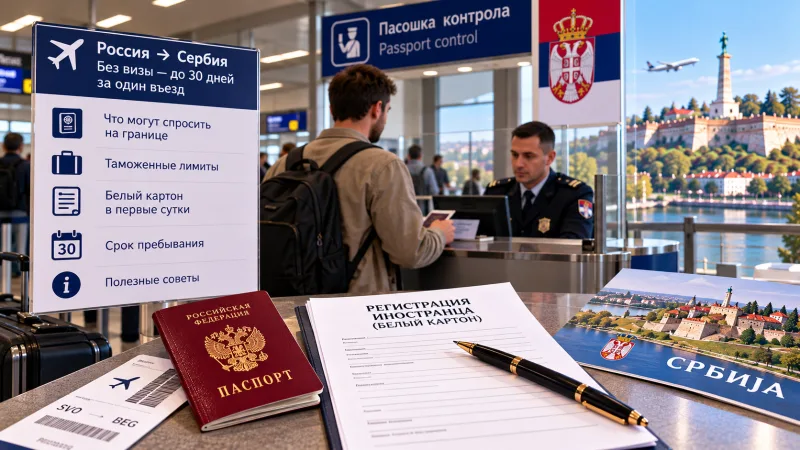
Entering Serbia visa-free: how many days, which documents, and what you cannot bring
Russian citizens may stay in Serbia visa-free for 30 days per entry. We cover what may be asked at the border, the customs limits in force, and why the white card is needed within the first day.
 Housing
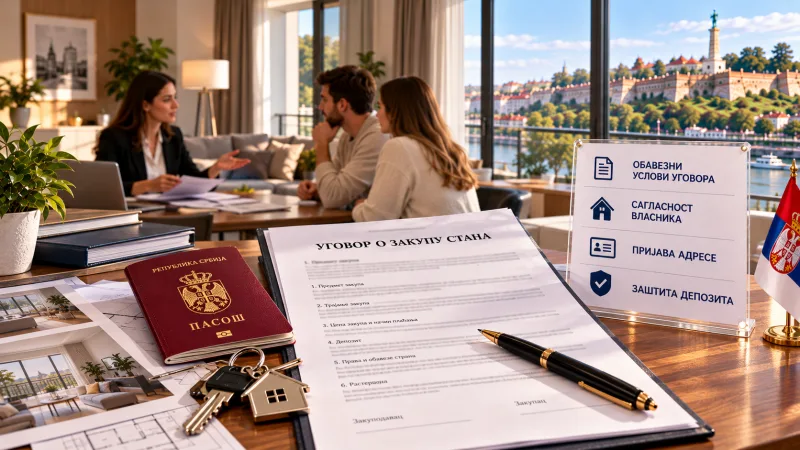
The lease contract: what to check in it and which documents to get from the landlord
A lease is not only for the landlord's benefit: without one you cannot register your address or apply for residence. We cover the clauses a contract must contain, what to request from the owner, and how to protect your deposit.
 Housing
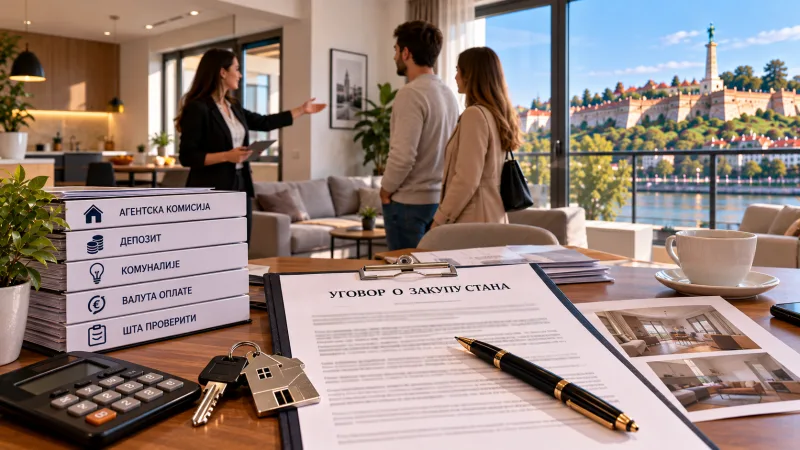
Renting a flat in Serbia: where to look and what the first month really costs
Agency commission, deposit, utilities and the currency of payment — what makes up the first month of a rental, and what to settle before signing so nothing has to be redone later.
 Daily Life
Deregistering from the Russian military record when you move abroad
If you have left Russia for more than six months and do not plan to return, the military record can be closed through a representative holding a notarised power of attorney. We cover the documents, two ways to certify the power of attorney, and the order of steps.
 Daily Life
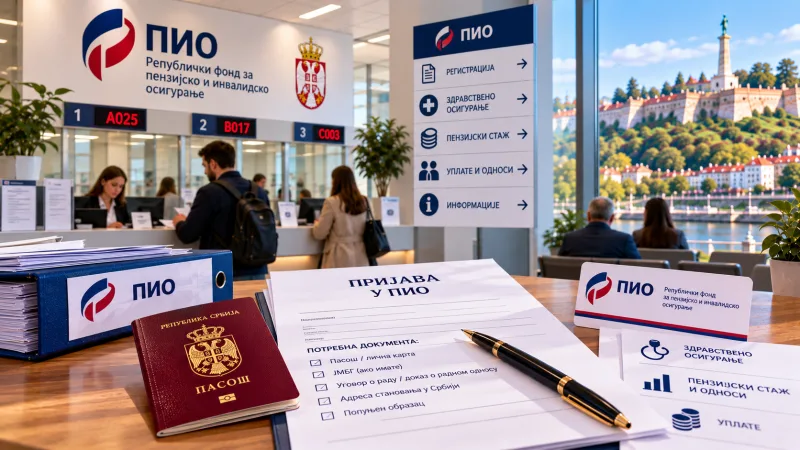
Registering with the PIO pension fund: why and how
Without PIO registration you cannot arrange state insurance, and your service record and contributions will not be recorded. We cover who needs it, which documents to take, where to go in Belgrade and Novi Sad, and what to say there.
 Daily Life
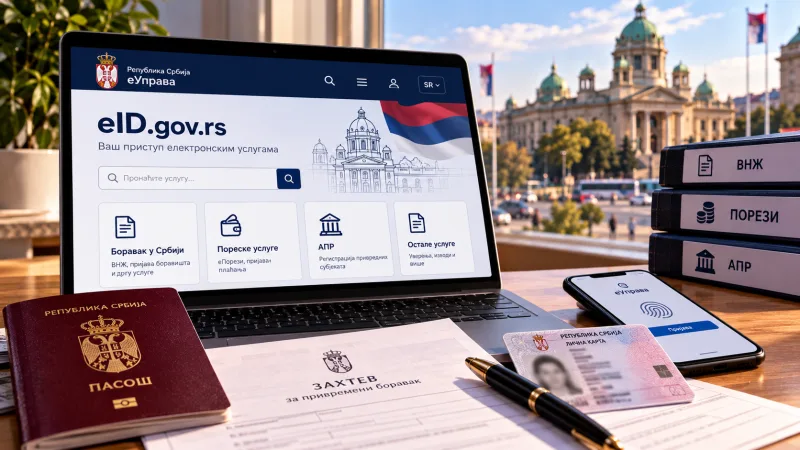
An eID account and Serbia's government services: how to register
An account on eid.gov.rs opens online residence applications, tax services and APR filings. We cover what to upload, which details to enter, and why registration most often fails on small things.
 Daily Life
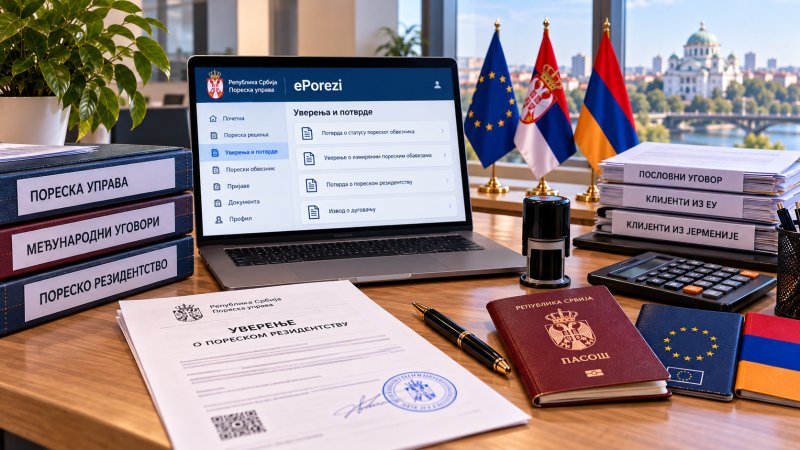
Court interpreters in Serbia: why they are needed and what a translation costs
State bodies, banks and the MUP accept translations only from a court interpreter. We cover where one is needed, the price per page, whether an apostille is required, and what to do if there is no interpreter for your language.
 Residency & Immigration
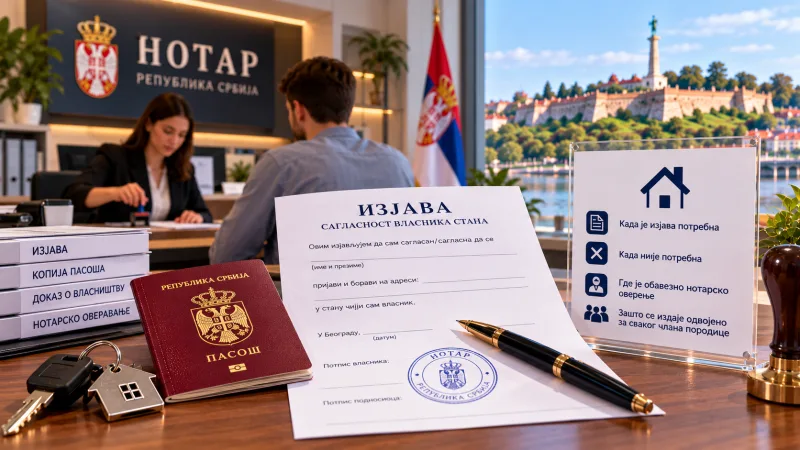
The landlord's statement (izjava): consent to register at the address
The izjava is the flat owner's written consent for you to register and live at their address. We cover when it is needed, when it is not, where notarisation is mandatory, and why one is made per family member.
 Residency & Immigration
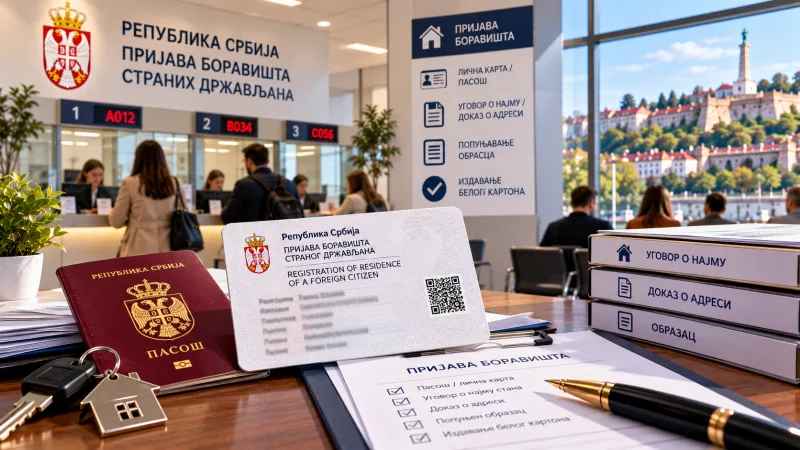
The white card: registering a foreigner's address in Serbia
The white card is a foreigner's registration at their place of residence. We explain who must arrange it, what it is needed for, which documents to take, and why banks accept one type of card but not the other.
 Healthcare
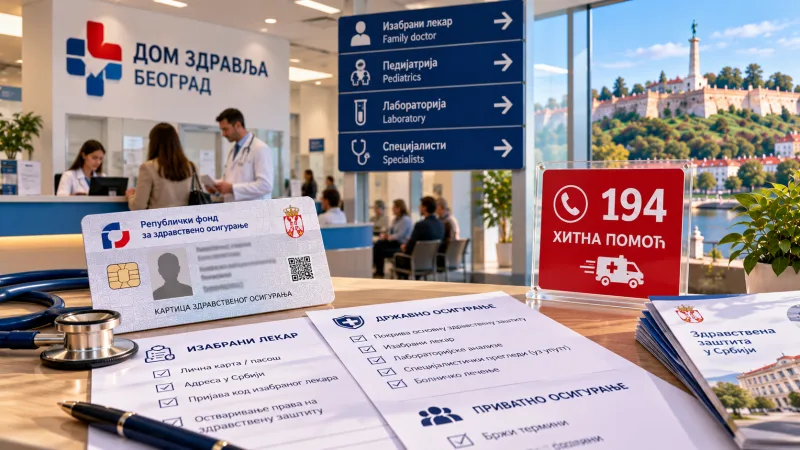
Healthcare in Serbia: how to see a doctor and what to do in an emergency
A foreigner has the right to medical care under the law. We cover how to choose a family doctor, what state insurance gives you, when a private policy makes sense, and why 194 is worth memorising.
 Daily Life
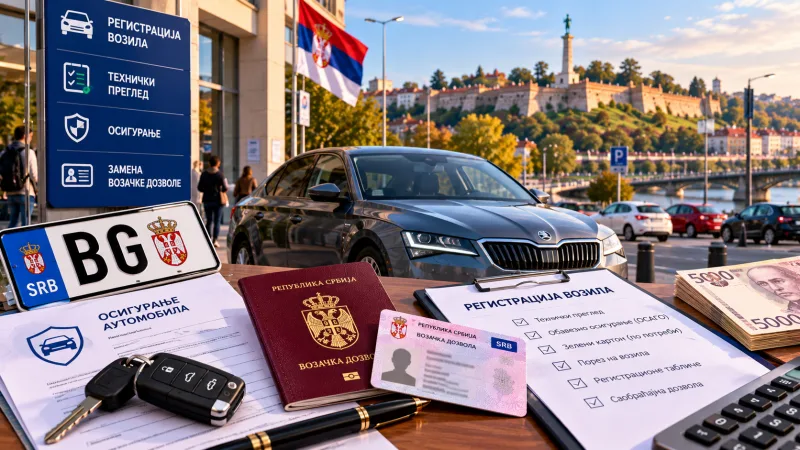
A car in Serbia: registration, insurance and the driving licence
What it costs to keep a car, which documents registration requires, what is needed to exchange a foreign licence, and why a foreigner with residence pays the same as locals.
 Daily Life
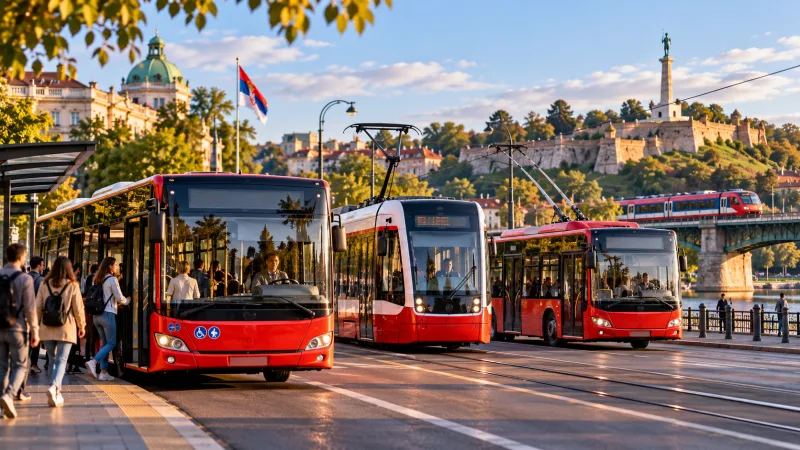
Public transport in Belgrade is free: how it works
Since 1 January 2025 city transport in Belgrade has been free for all passengers: buses, trams, trolleybuses and the BG voz train. There are no tickets, no inspectors and no fines. We explain what was abolished and what remains.
 Daily Life
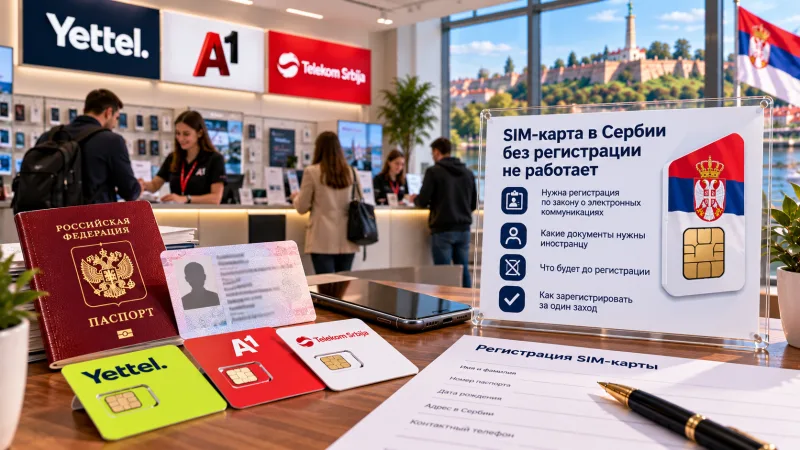
Mobile networks in Serbia: how a foreigner registers a number
A prepaid SIM in Serbia does not work unregistered: under the electronic communications law the number must be registered. We cover which documents a foreigner needs, what applies before registration, and how to do it in one visit.
 Residency & Immigration
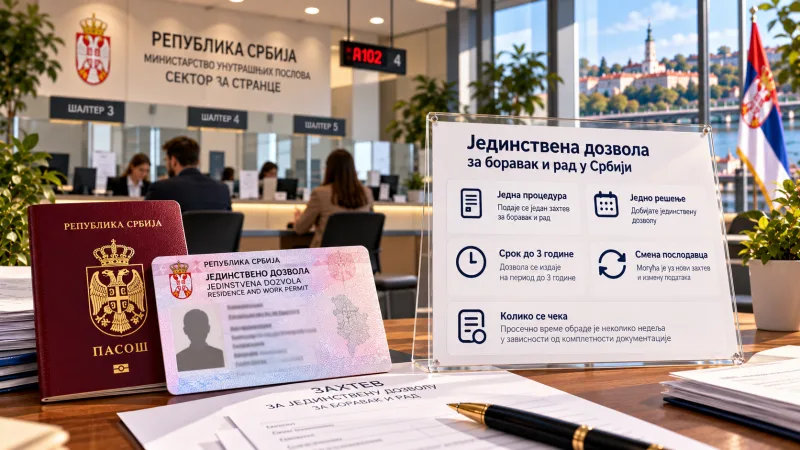
Residence through employment: the unified work and residence permit
To work in Serbia a foreigner is issued a unified permit — one procedure, one decision, valid for up to three years. We explain how it works, what happens when you change employer, and how long it takes.
 Residency & Immigration
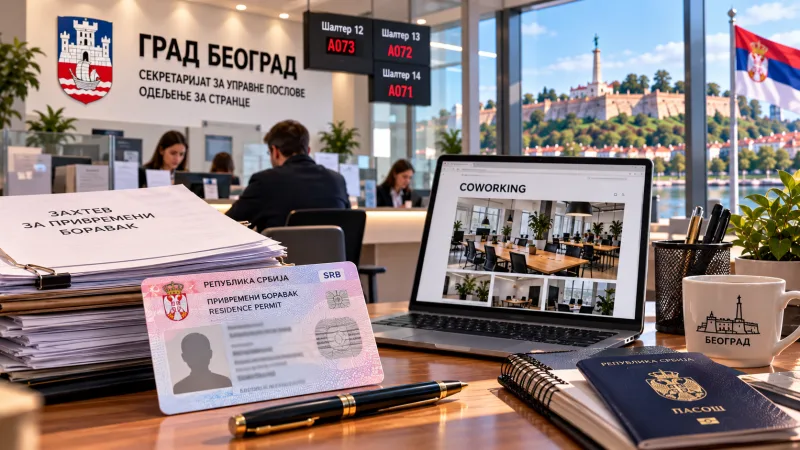
Residence via a sole trader and the business address: the coworking problem
Since December 2024 MUP Belgrade has been selectively delaying residence based on sole-trader status when the address is registered at a coworking space. We set out three workable fixes and what not to do.
 Banking & Finance
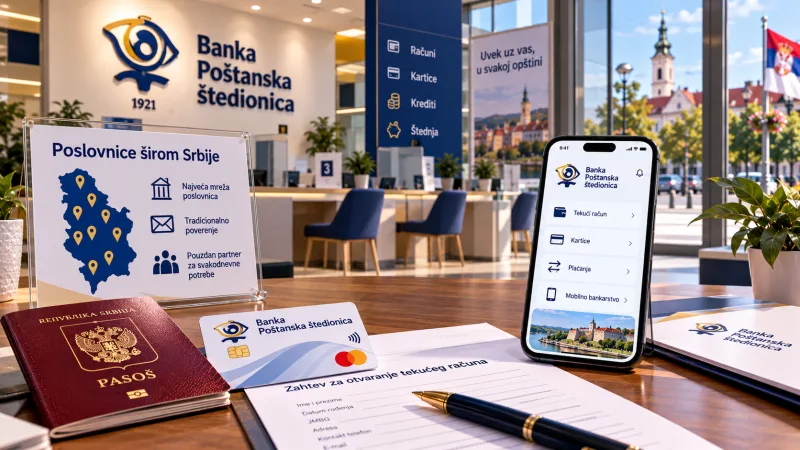
Banka Poštanska štedionica: an account at the state bank with branches nationwide
Poštanska štedionica is a state bank with branches in almost every post office. We cover what people say about accounts for foreigners, what servicing costs, and the drawbacks.
 Banking & Finance
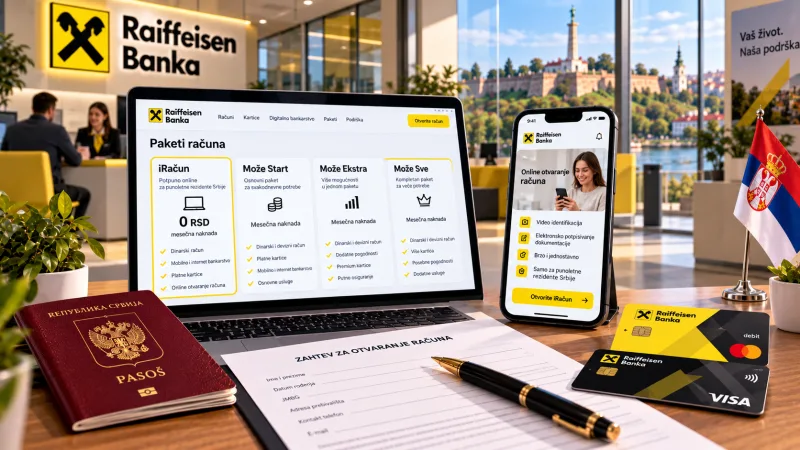
Raiffeisen banka: packages, online opening and what matters
At Raiffeisen a business account can be opened online in 30 minutes, with no account fee for the first 12 months. We cover the packages, the documents a non-resident needs, and the practical drawbacks clients report.
 Banking & Finance
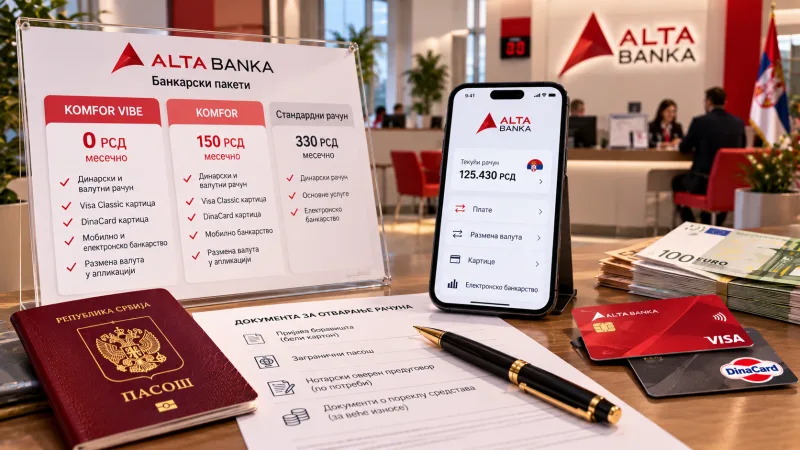
Alta banka: an account for a foreigner and what it costs
Alta banka has a package with no monthly account fee, while basic account keeping in the tariff is 330 dinars. We cover the conditions, what is required to open an account, and what people complain about in practice.
 Banking & Finance
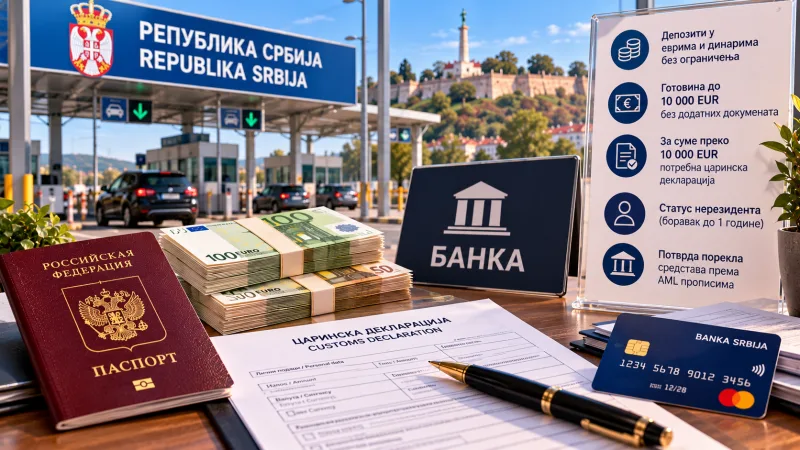
Currency rules for non-residents in Serbia: what is allowed
Who counts as a non-resident, how much cash can be paid in without documents, what changes after a year in the country, and why the bank asks about the origin of the money. Per the law and the Serbian Banks Association's guidance.
 Banking & Finance
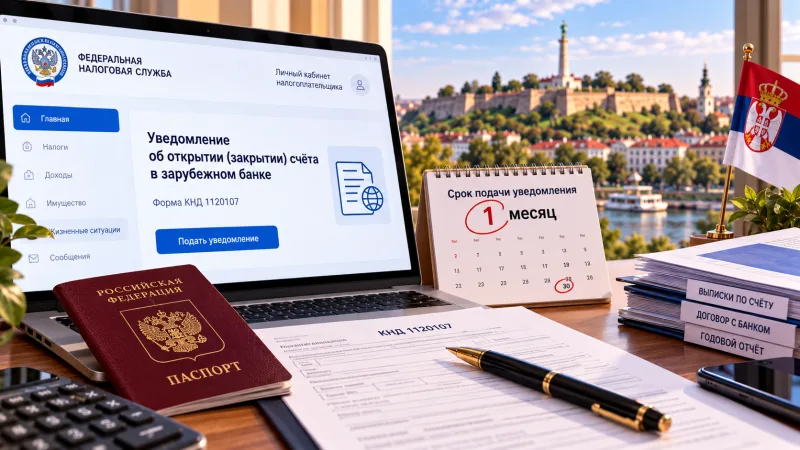
A Serbian bank account and the Russian tax office: notification and reporting
Whether you must notify the tax office of a foreign account opened when moving to Serbia, when you are a Russian currency resident, the fines for failure to notify, how to file the movement-of-funds report and how to transfer money from Russia to Serbia.
 Banking & Finance
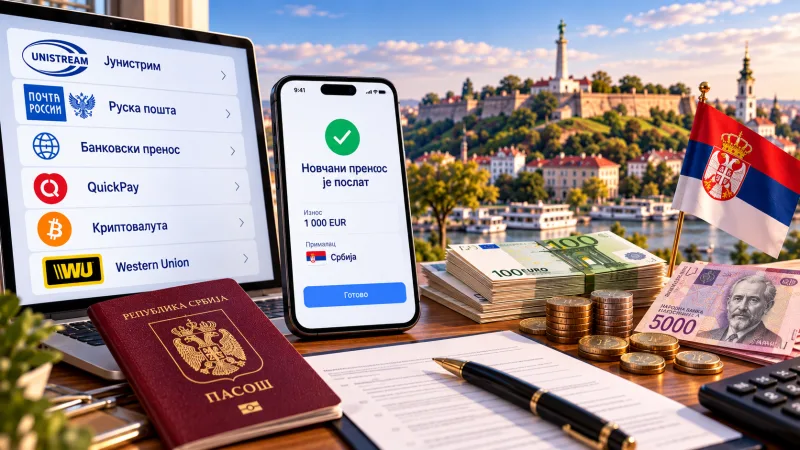
Transfers to Serbia and proving where the money came from
Why transfers hinge on one thing: proving the origin of the money. We cover which channels work, what the bank asks for in advance, and what happens if the paperwork is not ready.
 Banking & Finance
The bank refused an account: what to do and where to complain
A refusal to open an account is not the end. We cover the legal ground for refusal, what helps on a second attempt, how long a bank has to answer a complaint, and when the National Bank of Serbia steps in.
 Banking & Finance
What a Serbian bank account costs: 2026 fees
We collected official tariffs from Serbian banks: the monthly account fee, where the first 12 months are free, and what issuing a card costs. The data is checked against the banks' own documents.
 Banking & Finance
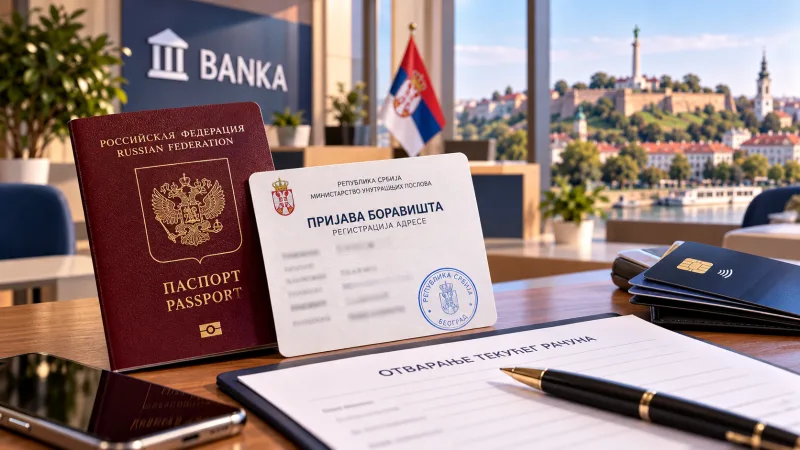
A bank account in Serbia: what a foreigner needs
The key document for a Serbian bank account is not your passport but the 'white card' — an address registration issued by the police. We cover what to bring, which banks ask for an employment contract, how long it takes, and opening an account by proxy.